<?xml version="1.0" encoding="utf-8"?><feed xmlns="http://www.w3.org/2005/Atom" ><generator uri="https://jekyllrb.com/" version="3.10.0">Jekyll</generator><link href="https://kailab.tech/feed.xml" rel="self" type="application/atom+xml" /><link href="https://kailab.tech/" rel="alternate" type="text/html" /><updated>2025-11-05T07:08:55+00:00</updated><id>https://kailab.tech/feed.xml</id><title type="html">KAI LAB</title><subtitle>KAI - A laboratory for Artificial Intelligence Research</subtitle><entry><title type="html">My Deep Learning Indaba 2025 Experience in Rwanda</title><link href="https://kailab.tech/2025/10/30/dli-experience-Grey.html" rel="alternate" type="text/html" title="My Deep Learning Indaba 2025 Experience in Rwanda" /><published>2025-10-30T06:30:00+00:00</published><updated>2025-10-30T06:30:00+00:00</updated><id>https://kailab.tech/2025/10/30/dli-experience-Grey</id><content type="html" xml:base="https://kailab.tech/2025/10/30/dli-experience-Grey.html"><![CDATA[<div>
    <p>
        <span class="drop-cap">I</span>am Grey Mengezi, a member of KAI Lab, where we focus on building practical AI solutions for African
        challenges. This post shares my experience attending the Deep Learning Indaba 2025 in Rwanda, an event
        that brought together researchers, engineers, and students from across the continent and beyond. I attended
        the Indaba to represent KAI Lab and showcase our work on the <a class="news-link" href="https://arxiv.org/abs/2505.01242"
        target="_blank">mwBTFreddy dataset</a>, which is part of our <a class="news-link"
        href="/projects/drm_project/">Disaster Management research project</a> aimed at mapping and analysing
        building damage in Malawi following Cyclone Freddy.
    </p>
    <p>
        Attending the Deep Learning Indaba 2025 in Rwanda was one of the most transformative experiences of my
        journey as an early-career researcher in Machine Learning and Artificial Intelligence. I left inspired, 
        informed, and motivated to continue building my skills and contributing to the AI community.       
    </p>
  
    <p class="blog-question">Workshops, Tutorials and Practicals</p>
    <p>
        The workshops and tutorials were well-organized, with clear structures and engaging speakers. One
        highlight was the Mathematics of Deep Learning tutorial, which revisited essential concepts in
        Linear Algebra and Calculus and showed their direct applications to deep learning. This session
        strengthened my foundational understanding and gave me more confidence in applying mathematical
        tools to ML research.
    </p>
    <p>
        The Machine Learning Foundations practical was equally impactful. Having access to the notebooks
        beforehand made the session smooth and easy to follow. We built and trained deep learning models from
        scratch using NumPy and later explored how to efficiently scale to larger models using frameworks like
        JAX. This hands-on progression from fundamentals to practical tools bridged theory and application
        perfectly.
    </p> 
    <p class="blog-question">Lightning Talk & Poster Presentation</p>
    <p>
        I had the opportunity to give a short 6-minute lightning talk during the Research in Africa Day dataset
        spotlight session. I presented the mwBTFreddy dataset, created for disaster management research
        in Malawi. Later, I showcased the dataset in my 
        <a class="news-link" href="https://drive.google.com/file/d/1HtFl5fNCmtzHgsZ38YSGJvd7Uz8McHzv/view" target="_blank">
            poster<img class="see-more-icon" src="../../../assets/icons/external-link-icon.svg" />
        </a>presentation, which focused on using ML to
        detect building damage after Cyclone Freddy. Sharing this work with attendees from diverse academic
        and professional backgrounds was rewarding. I received insightful feedback and recommendations on
        methods and tools to further strengthen the research. To my delight, the poster was awarded recognition
        as one of the best posters under the African Datasets category, which was both validating and motivating.
    </p>
    <p class="sms-blog-images">
        <img height="400px" src="https://ik.imagekit.io/xnaedr4r6/KAI_Website_Images/2025_dli_1.jpg?updatedAt=1762128615006" alt="poster_presentation" />
        <img height="400px" src="https://ik.imagekit.io/xnaedr4r6/KAI_Website_Images/2025_dli_2.jpg?updatedAt=1762128843360" alt="poster_awards" />
        <p style="text-align: center;"><i>Poster presentation session (left) and poster awards presentation (right)</i></p>
    </p>  

    <p class="blog-question">Networking and Community</p>
    <p>
        The Indaba also provided a unique space to connect with researchers from Google and Google DeepMind. I learned
        about scholarship opportunities, and received guidance on preparing for competitive interviews. These
        interactions expanded my perspective on the pathways available for early-career researchers like myself.
    </p>
    <p>
        I also met fellow Malawians during the event, and we discussed potential collaborations back home.
        We talked about IndabaX Malawi and they expressed interest in participating and contributing to it.
        We also explored ways to engage more researchers and students in Malawi to increase participation in
        such events, which I believe could have an impact on strengthening the local AI community.
    </p>

    <p class="sms-blog-images">
        <img height="500px" src="https://ik.imagekit.io/xnaedr4r6/KAI_Website_Images/2025_dli_3.jpg?updatedAt=1762129545340" alt="malawians_2025_dli" />
        <p style="text-align: center;"><i>Fellow Malawians at Deep Learning Indaba 2025 in Rwanda</i></p>
    </p>
    <p>
        Equally inspiring was the sense of community. From keynote talks like Verena Rieser’s discussion on
        aligning AI with diverse views to the many informal conversations, I was reminded of the importance of
        context, diversity, and inclusivity in AI development. This spirit of collaboration reflected this year’s
        theme, Urunana (Hand in hand) - working together to advance AI in Africa. Meeting fellow Malawians and
        connecting with researchers from across the continent reinforced the importance of building together,
        hand in hand, for lasting impact.
    </p>
    <p class="blog-question">Booths and Opportunities</p>
    <p>
        The exhibition booths were another highlight. Organizations such as Google, MILA, IBM, InstaDeep,
        EqualyzAI, and Etihuku showcased their research, internships, and scholarship opportunities. Each booth
        offered insights into ongoing work in AI and ways for collaboration, training, and career advancement.
        For me as an early-career researcher, these interactions were invaluable in expanding both knowledge
        and opportunities.
    </p>
    <p class="blog-question">Cultural Dinner</p>
    <p>
        The fourth day of the event concluded with one of the biggest fun highlights of the Indaba, the Culture
        Dinner. This was a celebration of Africa’s cultural diversity, where participants wore traditional attire
        and showcased their country’s music, dances and poetry. It was a reminder of the unity and richness of
        the African continent, and it added a warm dimension to the otherwise technical and academic environment.
    </p>
     <p class="sms-blog-images">
        <video width="540" height="300" controls loop muted>
            <source src="https://ik.imagekit.io/xnaedr4r6/KAI_Website_Images/2025_dli_4.mp4?updatedAt=1762131890196 type='video/mp4'">
        </video>
        <p style="text-align: center;"><i>Cultural dinner at Indaba</i></p>
   </p>
    <p class="blog-question">Reflections and Future Vision</p>
    <p>
        What stood out most was how well-organized the entire event was. From effective communication to logistical
        support, the Indaba team ensured a seamless experience for participants. The diversity of topics, speakers,
        and participants made every session enriching. Looking forward, I would love to see even more advanced
        deep learning topics covered, along with continued emphasis on applied AI solutions for African challenges.
    </p>
    <p>
        The Deep Learning Indaba 2025 was not just an event, but a key step in my research journey. It strengthened
        my technical skills, expanded my network, and deepened my appreciation for the role of diversity and
        context in AI. Most importantly, it left me inspired to keep learning, building, and contributing to the
        African AI ecosystem. I am grateful to the organizers, speakers, and community for making this experience
        possible, and I look forward to being part of the Indaba community in the years to come. See you in Nigeria!
    </p>
     
</div>]]></content><author><name>Grey Mengezi</name></author><summary type="html"><![CDATA[Attending the Deep Learning Indaba 2025 in Rwanda was one of the most transformative experiences of my journey as an early-career researcher in Machine Learning and Artificial Intelligence.]]></summary><media:thumbnail xmlns:media="http://search.yahoo.com/mrss/" url="https://ik.imagekit.io/xnaedr4r6/KAI_Website_Images/Team_Images_With_Uniform_Background/G_Mengezi.jpg?updatedAt=1722240427806" /><media:content medium="image" url="https://ik.imagekit.io/xnaedr4r6/KAI_Website_Images/Team_Images_With_Uniform_Background/G_Mengezi.jpg?updatedAt=1722240427806" xmlns:media="http://search.yahoo.com/mrss/" /></entry><entry><title type="html">2024 Government AI Readiness Index: Which IndabaX Countries Are Most Prepared to Use AI?</title><link href="https://kailab.tech/2025/02/21/government-ai-readiness-Evie.html" rel="alternate" type="text/html" title="2024 Government AI Readiness Index: Which IndabaX Countries Are Most Prepared to Use AI?" /><published>2025-02-21T06:30:00+00:00</published><updated>2025-02-21T06:30:00+00:00</updated><id>https://kailab.tech/2025/02/21/government-ai-readiness-Evie</id><content type="html" xml:base="https://kailab.tech/2025/02/21/government-ai-readiness-Evie.html"><![CDATA[<div>
    <p>
        <span class="drop-cap">T</span>he Government AI Readiness Index is an annual report produced by Oxford Insights that seeks to answer
        the question: how ready is a given government to implement AI in the delivery of public services to their citizens?. Recognized by
        UNESCO and the G20, it is a trusted tool for policymakers worldwide. The 2024 index examines 40 key indicators across three areas;
        Government, Technology Sector, and Data & Infrastructure in order to track progress, identify challenges, and uncover opportunities.
        As governments navigate economic uncertainty and climate change, AI has the potential to enhance decision-making. By providing clear
        insights, the index helps policymakers harness AI to better serve their citizens. As AI continues to shape the future, initiatives like
        IndabaX play a crucial role in promoting research and collaboration across Africa.      
    </p>
    <p>
        The IndabaX programme is a growing initiative that brings together African countries to strengthen the machine learning and AI community.
        Launched in 2018, it has expanded each year, providing a platform for learning, research, and collaboration beyond the annual Deep
        Learning Indaba conference. In 2024, the programme supported 47 countries, including Algeria, Kenya, Nigeria, South Africa, Egypt,
        Ghana, and many more, with events that were scheduled across the continent. These gatherings, organized locally, range from small
        workshops to large conferences with hundreds of attendees, encouraging knowledge sharing and innovation in AI. The initiative continues
        to grow, aiming to reach every African country in the near future. The table below shows the countries that participated in IndabaX 2024
        and their history of hosting the IndabaX event.
    </p>
    <div class="blog-table-container">
        <table>
            <thead>
                <tr>
                    <th>IndabaX Country</th><th>IndabaX 2018</th><th>IndabaX 2019</th><th>IndabaX 2020</th><th>IndabaX 2021</th>
                    <th>IndabaX 2022</th><th>IndabaX 2023</th><th>IndabaX 2024</th>
                </tr>
            </thead>
            <tbody>
                <tr><td>Algeria</td><td>&#9989;</td><td>&#9989;</td><td></td><td>&#9989;</td><td>&#9989;</td><td>&#9989;</td><td>&#9989;</td></tr>
                <tr><td>Angola</td><td></td><td></td><td></td><td></td><td></td><td></td><td>&#9989;</td></tr>
                <tr><td>Benin</td><td>&#9989;</td><td></td><td></td><td></td><td>&#9989;</td><td>&#9989;</td><td>&#9989;</td></tr>
                <tr><td>Botswana</td><td></td><td>&#9989;</td><td></td><td></td><td></td><td></td><td>&#9989;</td></tr>
                <tr><td>Burkina Faso</td><td></td><td>&#9989;</td><td></td><td></td><td></td><td>&#9989;</td><td>&#9989;</td></tr>
                <tr><td>Burundi</td><td></td><td>&#9989;</td><td></td><td></td><td></td><td>&#9989;</td><td>&#9989;</td></tr>
                <tr><td>Cameroon</td><td>&#9989;</td><td>&#9989;</td><td></td><td>&#9989;</td><td>&#9989;</td><td>&#9989;</td><td>&#9989;</td></tr>
                <tr><td>Carpe Verde</td><td></td><td></td><td></td><td></td><td></td><td></td><td>&#9989;</td></tr>
                <tr><td>Central African Republic</td><td></td><td></td><td></td><td></td><td></td><td></td><td>&#9989;</td></tr>
                <tr><td>Chad</td><td></td><td></td><td></td><td></td><td></td><td></td><td>&#9989;</td></tr>
                <tr><td>Comoros</td><td></td><td></td><td></td><td></td><td></td><td></td><td>&#9989;</td></tr>
                <tr><td>Côte d’Ivoire</td><td></td><td></td><td></td><td>&#9989;</td><td>&#9989;</td><td>&#9989;</td><td>&#9989;</td></tr>
                <tr><td>DR Congo</td><td></td><td>&#9989;</td><td></td><td></td><td>&#9989;</td><td>&#9989;</td><td>&#9989;</td></tr>
                <tr><td>Egypt</td><td></td><td>&#9989;</td><td></td><td></td><td></td><td>&#9989;</td><td>&#9989;</td></tr>
                <tr><td>Equatorial Guinea</td><td></td><td></td><td></td><td></td><td></td><td></td><td>&#9989;</td></tr>
                <tr><td>Eswatini</td><td></td><td>&#9989;</td><td></td><td>&#9989;</td><td>&#9989;</td><td>&#9989;</td><td>&#9989;</td></tr>
                <tr><td>Ethiopia</td><td>&#9989;</td><td>&#9989;</td><td></td><td>&#9989;</td><td>&#9989;</td><td>&#9989;</td><td>&#9989;</td></tr>
                <tr><td>Gambia</td><td></td><td>&#9989;</td><td></td><td>&#9989;</td><td></td><td>&#9989;</td><td>&#9989;</td></tr>
                <tr><td>Ghana</td><td>&#9989;</td><td>&#9989;</td><td></td><td>&#9989;</td><td>&#9989;</td><td>&#9989;</td><td>&#9989;</td></tr>
                <tr><td>Guinea</td><td></td><td></td><td></td><td></td><td></td><td>&#9989;</td><td>&#9989;</td></tr>
                <tr><td>Guinea-Bissau</td><td></td><td></td><td></td><td></td><td></td><td></td><td>&#9989;</td></tr>
                <tr><td>Kenya</td><td>&#9989;</td><td>&#9989;</td><td></td><td>&#9989;</td><td>&#9989;</td><td>&#9989;</td><td>&#9989;</td></tr>
                <tr><td>Lesotho</td><td></td><td>&#9989;</td><td></td><td>&#9989;</td><td></td><td>&#9989;</td><td>&#9989;</td></tr>
                <tr><td>Liberia</td><td></td><td></td><td></td><td></td><td></td><td></td><td>&#9989;</td></tr>
                <tr><td>Madagascar</td><td>&#9989;</td><td></td><td></td><td></td><td>&#9989;</td><td>&#9989;</td><td>&#9989;</td></tr>
                <tr><td>Malawi</td><td></td><td>&#9989;</td><td></td><td>&#9989;</td><td>&#9989;</td><td>&#9989;</td><td>&#9989;</td></tr>
                <tr><td>Mali</td><td></td><td></td><td></td><td>&#9989;</td><td>&#9989;</td><td>&#9989;</td><td>&#9989;</td></tr>
                <tr><td>Mauritania</td><td></td><td></td><td></td><td></td><td></td><td></td><td>&#9989;</td></tr>
                <tr><td>Mauritius</td><td>&#9989;</td><td></td><td></td><td></td><td>&#9989;</td><td>&#9989;</td><td>&#9989;</td></tr>
                <tr><td>Morocco</td><td>&#9989;</td><td>&#9989;</td><td></td><td></td><td></td><td>&#9989;</td><td>&#9989;</td></tr>
            </tbody>
        </table>
    </div>
    <p style="text-align: center;"><i>Table 1: IndabaX Countries and Event Participation History (2018–2024)</i></p>
    <p>
        To understand how these insights translate to African AI development, we examine the AI preparedness of countries within the IndabaX
        community. We use the data provided by Oxford insights to identify which nations are best positioned to implement AI in governance and
        public services. As IndabaX continues to strengthen AI research and collaboration across Africa, understanding the AI readiness of its
        member countries provides valuable insights into regional strengths, gaps, and opportunities for growth.
    </p>
    <p class="blog-question">Findings</p>
    <p>
        The map below illustrates the global readiness of countries to adopt AI. Countries least prepared for AI adoption are represented by
        the color on the far left of the scale, while readiness increases as the color shifts toward the right. The countries with the color on
        the far right of the scale are the most prepared to implement AI.
    </p>
    <p class="sms-blog-images">
        <img width="70%" class="ai-readiness-blog-images"src="https://ik.imagekit.io/xnaedr4r6/KAI_Website_Images/govt-ai-blog-charts/map.png?updatedAt=1740139201664" alt="map_illustration" />
    </p>    
    <p>
        Based on the 2024 AI Readiness Index, several IndabaX countries stand out as frontrunners in AI adoption. Egypt emerges as the most
        AI-ready country within the IndabaX community, ranking 65th globally with a preparedness score of 55.63. It is followed by Mauritius
        at 69th place with a score of 53.94% and South Africa at 72nd with 52.91%. The following sections break down AI readiness into the three
        key pillars: government support, technology sector development, and data and infrastructure readiness.
    </p>
    <p>
        Government Support for AI: Rwanda leads in government support (71.44), followed by Egypt (68.98) and Mauritius (65.31), demonstrating
        strong AI policy efforts and investment. In contrast, Sudan (13.32), the Central African Republic (12.07), and Guinea-Bissau (14.65)
        show weak governmental backing.
    </p>
    <p>
        Technology Sector Development: Egypt (42.13), South Africa (39.15), and Tunisia (41.07) have the strongest technology sectors,
        promoting AI innovation. Meanwhile, Chad (18.22), DR Congo (15.99), and Angola (15.87) struggle due to underdeveloped tech ecosystems.
    </p>
    <p>
        Data and Infrastructure Readiness: South Africa (65.28), Mauritius (63.81), and Tunisia (61.35) are best positioned in terms of data
        availability and infrastructure, essential for AI adoption. However, Burundi (27.84), Chad (28.82), and the Central African Republic
        (28.77) face significant gaps.
    </p>
    <p>
        The charts below categorize IndabaX countries into three groups: the top 10 most AI-prepared, mid-level countries, and those that are
        least prepared. Addressing disparities in government support, technology, and infrastructure will be key to advancing AI readiness
        across the region.
    </p>
    <p class="sms-blog-images">
        <p class="sms-blog-image">
            <img width="70%" src="https://ik.imagekit.io/xnaedr4r6/KAI_Website_Images/govt-ai-blog-charts/chart_3.png?updatedAt=1740139041868" alt="chart_3"/>
            <p style="text-align: center;"><i>Chart 1: The top 10 most prepared countries</i></p>
        </p>
        <p class="sms-blog-image">
            <img width="70%" src="https://ik.imagekit.io/xnaedr4r6/KAI_Website_Images/govt-ai-blog-charts/chart_2.png?updatedAt=1740139041892" alt="chart_2"/>
            <p style="text-align: center;"><i>Chart 2: The mid-level countries in terms of AI preparedness</i></p>
        </p>
        <p class="sms-blog-image">
            <img width="70%" src="https://ik.imagekit.io/xnaedr4r6/KAI_Website_Images/govt-ai-blog-charts/chart_1.png?updatedAt=1740139041908" alt="chart_1"/>
            <p style="text-align: center;"><i>Chart 3: The least prepared countries</i></p>
        </p>
    </p>    
    <p>
        The 2024 Government AI Readiness Index highlights the varying levels of AI preparedness among IndabaX countries. Egypt, Mauritius, and
        South Africa lead the rankings, demonstrating strong governmental support, a growing technology sector, and developed data infrastructure.
        Rwanda, Senegal, and Tunisia follow closely, signaling steady progress in AI adoption. However, many nations, particularly those ranking
        lower on the index, still face challenges in policy development, digital infrastructure, and AI investment. Despite this, the IndabaX
        community is working towards the goal of Africans not only being observers and receivers of the ongoing advances in AI, but active
        shapers and owners of these technological advances. With Continued collaboration, investment, and better policies, even the least-prepared
        countries can improve their AI readiness in the future. Below is an example chart that shows other factors that were used to measure AI
        readiness of a country. 
    </p>
    <p class="sms-blog-images">
        <img width="70%" class="ai-readiness-blog-images"src="https://ik.imagekit.io/xnaedr4r6/KAI_Website_Images/govt-ai-blog-charts/chart_4.png?updatedAt=1740139164363" alt="chart_4" />
    </p>     
</div>]]></content><author><name>Evie Chapuma</name></author><summary type="html"><![CDATA[The Government AI Readiness Index is an annual report produced by Oxford Insights that seeks to answer the question: how ready is a given government to implement AI in the delivery of public services to their citizens?.]]></summary><media:thumbnail xmlns:media="http://search.yahoo.com/mrss/" url="https://ik.imagekit.io/xnaedr4r6/KAI_Website_Images/Team_Images_With_Uniform_Background/E_Chapuma.jpg?updatedAt=1722240435100" /><media:content medium="image" url="https://ik.imagekit.io/xnaedr4r6/KAI_Website_Images/Team_Images_With_Uniform_Background/E_Chapuma.jpg?updatedAt=1722240435100" xmlns:media="http://search.yahoo.com/mrss/" /></entry><entry><title type="html">Reflections on the International Day of Education: Embracing AI in Malawi’s Academic Landscape</title><link href="https://kailab.tech/2025/01/05/education-day-Grey.html" rel="alternate" type="text/html" title="Reflections on the International Day of Education: Embracing AI in Malawi’s Academic Landscape" /><published>2025-01-05T06:30:00+00:00</published><updated>2025-01-05T06:30:00+00:00</updated><id>https://kailab.tech/2025/01/05/education-day-Grey</id><content type="html" xml:base="https://kailab.tech/2025/01/05/education-day-Grey.html"><![CDATA[<div>
    <p>
        <span class="drop-cap">O</span>n the 31st of January 2025, my colleague, Chimwemwe Chamangwana, from KAI Lab and I had the privilege of
        attending the International Day of Education event at Katoto Secondary School in Mzuzu. Accompanied by a representative from UNIPOD, we
        joined educators, students, and institutions from across Malawi to engage in discussions about the evolving role of Artificial
        Intelligence (AI) in education.        
    </p>
    <p>
        The event was graced by two leaders: Hon. Madalitso Kambauwa Wirima, Minister of Basic and Secondary Education, and Hon. Jessie Kabwila,
        Minister of Higher Education. Both ministers underscored the importance of integrating AI responsibly into Malawi’s educational system,
        emphasizing the need to preserve human agency in an increasingly automated world. Their speeches resonated with the event’s theme:
        “Artificial Intelligence and Education: Preserving Human Agency in a World of Automation.”
    </p>   
    <p class="blog-question">Showcasing AI Innovations from KAI Lab</p>
    <p>
        As part of our participation, we presented two AI-driven projects that show how technology can enhance education and healthcare
        accessibility in Malawi.
    </p>
    <p class="sms-blog-images">
        <img height="500px" src="https://ik.imagekit.io/xnaedr4r6/KAI_Website_Images/Int'%20Education%20Day/IMG_9587.JPG?updatedAt=1739530773248" alt="mubas-stand" />
        <p style="text-align: center;"><i>MUBAS Stand</i></p>
    </p>
    <ul>
        <li><b>Leveraging AI to Model Determinants of Health Care and Education in Malawi</b>: This project focuses on using AI to map schools and
            healthcare facilities across Malawi, with the aim of identifying underserved areas and improving service delivery. By integrating
            AI-driven Geographic Information Systems (GIS) and modeling, this project analyzes accessibility challenges, providing data-driven
            recommendations for infrastructure development. Our work has already mapped over 340 schools and 146 health facilities in Blantyre,
            offering valuable insights into how AI can optimize resource allocation in education and healthcare.
        </li>
        <li><b>The role of AI in self-directed learning and professional development</b>: Developed at KAI Lab in collaboration with the Public
            Health Institute of Malawi (PHIM), IntelSurv leverages AI to support community health workers in understanding medical terms, case
            definitions, and data entry requirements. The tool provides real-time AI-powered feedback, improving training, knowledge access, and
            ultimately the quality of healthcare service delivery. 
        </li>
    </ul>
    <p class="blog-question">Engaging with Key Stakeholders</p>
    <p>
        The event began with a tour of various project stands, where the ministers and other dignitaries interacted with presenters. Our team was
        honored to be among the first to showcase our work, presenting second after the initial display. Representatives from the University of
        Malawi (UNIMA), Lilongwe University of Agriculture and Natural Resources (LUANAR), Mzuzu University (MZUNI), and various secondary schools
        were present, fostering a rich exchange of ideas.
    </p>
    <p>
        Following the presentations, attendees convened in the school hall for a series of activities, including panel discussions and student-led
        performances, all centered around AI and its transformative impact on education.
    </p>
    <p class="sms-blog-images">
        <img height="300px" src="https://ik.imagekit.io/xnaedr4r6/KAI_Website_Images/Int'%20Education%20Day/IMG_9660.JPG?updatedAt=1739530749928" alt="mubas-stand" />
        <img height="300px" src="https://ik.imagekit.io/xnaedr4r6/KAI_Website_Images/Int'%20Education%20Day/IMG_9653.JPG?updatedAt=1739530880221" alt="mubas-stand" />
        <p style="text-align: center;"><i>School Hall</i></p>
    </p>
    <p class="blog-question">Key Messages from the Ministers</p>
    <p>
        Dr. Jessie Kabwila encouraged institutions to leverage AI as a means of fostering innovation, ensuring that its application enhances
        rather than undermines human values. She highlighted the necessity of ethical AI implementation to help reduce socio-economic inequalities
        in education. Hon. Madalitso Kambauwa Wirima reiterated the government's dedication to embedding AI within national policies to ensure
        consistency across various sectors. She also announced plans for awareness programs aimed at educating teachers and students on
        responsible AI use and ethical digital practices.
    </p>
    <p class="blog-question">The Future of AI in Malawian Education</p>
    <p>
        The discussions at this event highlighted the need for AI literacy among students and educators. As Malawi moves towards AI integration in
        academic institutions, it is crucial to ensure that technology serves as a tool for empowerment rather than replacement. By promoting
        responsible AI use, we can preserve human agency while leveraging automation to enhance learning and service delivery.
    </p>
    <p>
        Our participation in this event reaffirmed KAI Lab’s commitment to driving AI innovation for societal impact. We look forward to further
        collaborations in education, healthcare and other sectors in Malawi.
    </p>
     
</div>]]></content><author><name>Grey Mengezi</name></author><summary type="html"><![CDATA[On the 31st of January 2025, my colleague, Chimwemwe Chamangwana, from KAI Lab and I had the privilege of attending the International Day of Education event at Katoto Secondary School in Mzuzu.]]></summary><media:thumbnail xmlns:media="http://search.yahoo.com/mrss/" url="https://ik.imagekit.io/xnaedr4r6/KAI_Website_Images/Team_Images_With_Uniform_Background/G_Mengezi.jpg?updatedAt=1722240427806" /><media:content medium="image" url="https://ik.imagekit.io/xnaedr4r6/KAI_Website_Images/Team_Images_With_Uniform_Background/G_Mengezi.jpg?updatedAt=1722240427806" xmlns:media="http://search.yahoo.com/mrss/" /></entry><entry><title type="html">Detecting SMS Fraud in Chichewa Using Machine Learning: A Research Journey</title><link href="https://kailab.tech/2024/12/18/sms-fraud.html" rel="alternate" type="text/html" title="Detecting SMS Fraud in Chichewa Using Machine Learning: A Research Journey" /><published>2024-12-18T06:30:00+00:00</published><updated>2024-12-18T06:30:00+00:00</updated><id>https://kailab.tech/2024/12/18/sms-fraud</id><content type="html" xml:base="https://kailab.tech/2024/12/18/sms-fraud.html"><![CDATA[<div>
    <p>
        <span class="drop-cap">S</span>SMS fraud, also known as smishing, is a growing global cybercrime where fraudsters exploit mobile users via deceptive text messages to steal sensitive information or money. 
        In African contexts, the challenges are particularly pronounced due to the multilingual environment, frequent code-switching, and a lack of labelled datasets in local languages such as Chichewa. 
        Additionally, the limited availability of linguistic tools and resources further complicates efforts to develop robust detection mechanisms. 
        My early work began with my undergraduate thesis, where I and a colleague collected SMS messages in Chichewa and run machine learning experiments on it. 
        This application was designed to detect and filter fraudulent messages in Chichewa. While the project was promising, gaps in data quality and methodology were identified. 
        The initial dataset, though valuable, needed improvement in terms of size, structure, and diversity, as well as corrections to the methodological approach.
        Collaboration with Dr. Amelia Taylor allowed for a deep exploration. Sharing a mutual interest in SMS fraud detection, I joined Dr. Taylor to expand the scope of the original project. 
        This collaboration aimed to address critical gaps, including improving the dataset, refining the methodology, and developing a more scalable and accurate detection system tailored for the African context.
        The expanded research involved several key activities: (1) cleaning and organising the existing dataset from your undergraduate project, (2) collecting new SMS data in Chichewa to create a larger, more representative dataset, (3) refining the methodology to include translation into English to facilitate multilingual model training, and (4) rerunning and improving machine learning experiments to achieve higher accuracy and better generalisation. 
    </p>
    <p>
        This project involved several individuals at the lab, each contributing complementary skills. These included Tamanda Phiri, who was part
        of the translation team alongside Ben Chapuma and myself. In addition to our roles in translation, Tamanda, Ben and I were actively
        involved in new data collection efforts which also included Alinafe Lipenga. Dr. Taylor guided us on methodology for machine learning, dataset preparation and data collection.
    </p>   
    <p class="blog-question">The inspiration behind the research</p>
    <p>
        Malawi, like many countries, has seen a rise in fraudulent SMS schemes targeting unsuspecting individuals. Several Malawians both in
        urban and rural areas have fallen victim to this act. A 2023 report from Malawi Communications Regulatory Authority(MACRA) indicated
        that approximately US$117,000 is stolen every month from Malawians through electronic fraud which usually takes the form of SMS and
        voice(phone calls). The fraudsters exploit the local language, Chichewa, to reach a wider audience including the rural masses who can
        read their messages. This Chichewa nature of fraudulent messages makes the traditional fraud detection tools which are often tailored
        for widely spoken global languages such as English to be less effective. This gap triggered a motivation to explore how machine
        learning (ML) could be leveraged to address this pressing issue in a local context.
    </p>
    <p class="sms-blog-images">
        <img height="300px" src="https://ik.imagekit.io/xnaedr4r6/KAI_Website_Images/fraud_sms_sample.jpg?updatedAt=1734510711940" alt="sms-fraud-sample" />
        <img height="300px" src="https://ik.imagekit.io/xnaedr4r6/KAI_Website_Images/fraud_sms_sample_2.jpg?updatedAt=1734510711819" alt="sms-fraud-sample2" />
        <p style="text-align: center;"><i>Sample fraudulent SMSs written in Chichewa language</i></p>
    </p>
    <p class="blog-question">Challenges in working with Chichewa SMS data</p>
    <p>
        One of the first hurdles we faced was the lack of a standardised Chichewa corpus that is suitable for SMSs. Unlike English, where
        extensive language resources are readily available, Chichewa has limited digital text repositories. There are some Chichewa corpi
        created for general text: <a href="https://zenodo.org/records/3731994">SpokenChichewaCorpus</a>, <a href="https://github.com/masakhane-io/lacuna_pos_ner">
        masakhane-io/lacuna_pos_ner</a>, <a href="https://github.com/masakhane-io/masakhane-pos">masakhane-io/masakhane-pos</a>. This scarcity
        meant we had to get creative with data collection, curating datasets from scratch. We gathered authentic SMS messages, both fraudulent
        and legitimate, from research participants who had consented and manually annotated them to train our machine learning models.
    </p>
    <p class="blog-question">The role of data augmentation</p>
    <p>
        To enhance our dataset, we employed a manual text augmentation. Chichewa, like other Bantu languages, has rich morphological structures
        and diverse dialectical variations. By focusing on specific parts of speech such as verbs, pronouns, prepositions, and nouns, we
        introduced variations in the SMS messages. This process included:
        <ol>
            <li>Addition of words that were implied by the text but were not explicitly present in the original Chichewa SMS.</li>
            <li>Synonym replacement through substitution of words with similar meanings to introduce diversity.</li>
            <li>Replacing borrowed words from English with the equivalent words in vernacular (Chichewa).</li>
        </ol>
        These transformations enriched the dataset without altering the original meaning of the messages, making the model more robust to
        real-world variations.
    </p>
    <p class="blog-question">Experimenting with machine learning models</p>
    <p>
        Our approach combined natural language processing (NLP) techniques with supervised machine learning algorithms. The preprocessing phase
        involved tokenising messages, encoding classes and vectorising text using TF-IDF (Term Frequency-Inverse Document Frequency) technique.
        We trained various models, including logistic regression and random forest, evaluating their performance using accuracy, precision,
        recall and f1-score metrics.
    </p>
    <p class="blog-question">Insights and outcomes</p>
    <p>
        A subset of 649 messages was used for experimenting with machine learning models. Random Forest model achieved the highest accuracy of
        97% while Logistic Regression achieved 96% on Chichewa dataset. Our dataset was also translated by human translators from the research
        team members and machine translator(Google Translate). From this translated dataset, Logistic Regression achieved highest with 96%
        accuracy while Random Forest came second with 95%. The performance of both models slightly decreased on the machine translated dataset.
        Beyond its technical success, the project underscored the importance of developing localized solutions. By tailoring our approach to
        the nuances of Chichewa, we demonstrated that machine learning can be a powerful tool for addressing language-specific challenges. 
    </p>
    <p class="sms-blog-images">
        <img height="300px" src="https://ik.imagekit.io/xnaedr4r6/KAI_Website_Images/fraud_sms_results.png?updatedAt=1734510712006" alt="sms-fraud-results" />
        <p style="text-align: center;"><i>A table of machine learning experimental results </i></p>
    </p>
    <p class="blog-question">New large dataset</p>
    <p>
        The research culminated in a model capable of detecting fraudulent SMS messages with a high degree of accuracy. A total of 15,229 raw
        SMS messages ,both fraudulent and non-fraudulent, were collected during the data collection exercise. This dataset is currently being
        prepared for analysis. 
    </p>
    <p class="blog-question">Reflections on the experience</p>
    <p>
        This research was more than an academic pursuit; it was a profound learning experience that extended far beyond technical model building.
        It highlighted the critical role of interdisciplinary collaboration, particularly through engaging with community stakeholders during
        data collection. Their firsthand experiences and insights provided invaluable context, deepening our understanding of the nuances of SMS
        fraud in Chichewa. These interactions helped us identify the tactics used by fraudsters and the cultural or linguistic cues that often
        made these scams convincing, ultimately shaping our approach to designing feasible research methodology.
    </p>
    <p>
        Additionally, this project reinforced the importance of ethical considerations when working with sensitive data. We prioritised data
        privacy and security, ensuring that all collected information was handled responsibly to protect participants' identities. These measures
        aligned with our commitment to maintaining trust and upholding ethical research standards.
    </p>
    <p>
        Finally, this research emphasised the need for context-aware innovation. By incorporating insights from the communities directly affected
        by SMS fraud, we shaped an approach that was both practical and grounded in real-world experiences. This ensured that our model not only
        performed well technically but also addressed the problem in a way that could resonate with and benefit the people it was intended to
        serve if integrated into a broader solution.
    </p>
    <p class="blog-question">Moving forward</p>
    <p>
        The fight against SMS fraud is far from over. While our model provides a robust starting point, there’s ample room for improvement.
        Future work could include experimenting with large SMS datasets and other SMS features such as phone numbers, time etc on top of SMS body
        which was only the focus feature in our research. Additionally, the development of a standardized Chichewa corpus could significantly
        benefit not only fraud detection but also other NLP applications. 
    </p>
    <p class="blog-question">Conclusion</p>
    <p>
        Our journey in detecting SMS fraud in Chichewa illustrates the transformative potential of machine learning when applied thoughtfully to
        local contexts. By addressing language-specific challenges, we can create solutions that are not only innovative but also impactful.
        This project stands as a testament to the power of technology to bridge gaps and solve pressing societal problems, one message at a time.
    </p>    
</div>]]></content><author><name>Amoss Robert</name></author><summary type="html"><![CDATA[In this blog post,I will talk about the research work that we did at the KAI Lab on using machine learning to detect SMS fraud in Chichewa, a widely spoken language in Malawi.]]></summary><media:thumbnail xmlns:media="http://search.yahoo.com/mrss/" url="https://ik.imagekit.io/xnaedr4r6/KAI_Website_Images/Team_Images_With_Uniform_Background/A_Robert.jpg?updatedAt=1722240435618" /><media:content medium="image" url="https://ik.imagekit.io/xnaedr4r6/KAI_Website_Images/Team_Images_With_Uniform_Background/A_Robert.jpg?updatedAt=1722240435618" xmlns:media="http://search.yahoo.com/mrss/" /></entry><entry><title type="html">Geography Meets Innovation: Insights from Our Hackathon Experience, 19th November 2024</title><link href="https://kailab.tech/2024/11/25/geo-week.html" rel="alternate" type="text/html" title="Geography Meets Innovation: Insights from Our Hackathon Experience, 19th November 2024" /><published>2024-11-25T06:30:00+00:00</published><updated>2024-11-25T06:30:00+00:00</updated><id>https://kailab.tech/2024/11/25/geo-week</id><content type="html" xml:base="https://kailab.tech/2024/11/25/geo-week.html"><![CDATA[<div>
    <p>
        <span class="drop-cap">T</span> he devastating impact of Tropical Cyclone Freddy on Southern Africa in 2023 (from February - March)
        highlighted the urgent need for innovative solutions in disaster management. In Malawi alone, over 500 lives were lost, thousands were
        displaced and communities struggled to rebuild amidst widespread flooding. While established disaster response methods are crucial, they
        can be slow or limited in their ability to respond to rapidly evolving crises. During the flooding, social media platforms like WhatsApp,
        Twitter, and Facebook became vital channels for real-time data sharing, providing an untapped opportunity to bridge these gaps. By
        leveraging social media data, we can enhance the speed and effectiveness of flood mapping and disaster response efforts, ensuring a more
        responsive and informed approach to future disasters.
    </p>
    <p>
        Recognizing this potential, we participated in the 2024 Geography Awareness Week Hackathon under the theme "Mapping Minds, Shaping the
        World." The event brought together developers, researchers, and mappers to explore how social media feeds could be harnessed to create
        structured systems for flood mapping. With the devastation of Cyclone Freddy serving as our problem statement and motivation, our mission
        was clear: to collaboratively design a solution that integrates data from social media into disaster management frameworks, leveraging
        tools like OpenStreetMap and AI technologies.
    </p>
    <p>
        What followed was an inspiring day of brainstorming, coding, and problem-solving. We divided ourselves into three teams based on
        individual areas of expertise, with everyone free to choose which group they wanted to participate in. Each team had a designated leader
        to guide the process and ensure smooth collaboration. Below is an outline of the tasks each team was assigned to work on during the
        hackathon:
    </p>    
    <p class="blog-question">Team 1: User Interface and Project Development</p>
    <div class="blog-image-section">
        <div class="blog-side-text">
            <div>
                <p>
                    The first team was tasked with building the core structure of the project. Their focus was on developing a user-friendly
                    interface that would allow for account creation, with affiliation as a required field. They were also responsible for
                    structuring the project to transition through three key stages:
                </p><br />
                <ol>
                    <li><b>Harvesting</b> – Collecting social media posts related to flooding events.</li>
                    <li><b>Filtering</b> – Ensuring that the collected posts met eligibility criteria, such as including images.</li>
                    <li><b>Mapping</b> – Organizing the filtered posts and creating a visual map of the flooding data for analysis.</li>
                </ol>
            </div>                        
        </div>
        <div>
            <img style="height: 400px; width: 400px; object-fit: cover;" src="https://ik.imagekit.io/xnaedr4r6/KAI_Website_Images/GEO_WEEK/Geo_week_hackathon_team_1.jpg?updatedAt=1732522435963" />
        </div>        
    </div>
    <p class="blog-question">Team 2: Data Filtering and AI Model Development</p>
    <div class="blog-image-section">
        <div class="blog-side-text">
            <div>
                <p>
                    This team’s focus was on filtering the social media data to ensure it met specific criteria. They were tasked with filtering
                    out posts that did not meet the required standards, such as posts without images. In addition, they were asked to identify
                    duplicate posts to avoid redundancy. Their role also included creating a simple page where users could manually mark posts as
                    relevant or not, aiding in the manual filtering process. Additionally, this team worked on laying the groundwork for developing
                    an AI model to automatically filter out off-topic posts, with the goal of continually training this model as new data was collected.
                </p><br />
            </div>                        
        </div>
        <div>
            <img style="height: 400px; width: 400px; object-fit: cover;" src="https://ik.imagekit.io/xnaedr4r6/KAI_Website_Images/GEO_WEEK/Geo_week_hackathon_team_2.jpg?updatedAt=1732526952955" />
        </div>        
    </div>
    <p class="blog-question">Team 3: Mapping and Location Automation</p>
    <div class="blog-image-section">
        <div class="blog-side-text">
            <div>
                <p>
                    The third team was responsible for mapping the filtered social media posts by identifying their actual locations.They explored
                    the use of geographic tools that could automate the process of linking images to specific locations, leveraging an already
                    available dataset of social media posts from Nkhotakota dwangwa floods. Their task also included using Natural Language
                    Processing (NLP) to aid in extracting geographic details from the posts, and cross-referencing them with platforms like Google
                    Maps or OpenStreetMap to determine the exact coordinates of the flooding events.
                </p><br />
            </div>                        
        </div>
        <div>
            <img style="height: 400px; width: 400px; object-fit: cover;" src="https://ik.imagekit.io/xnaedr4r6/KAI_Website_Images/GEO_WEEK/Geo_week_hackathon_team_3.jpg?updatedAt=1732527470214" />
        </div>        
    </div>
    <p class="blog-question">Turning Vision into Reality: Our Achievements in One Hour</p>
    <p>After dividing ourselves into teams and setting clear objectives, we gave ourselves one hour to achieve the tasks. Despite the limited
        time, we made impressive progress on our goals. Here's a look at what each team was able to accomplish during the hackathon:
    </p>
    <p class="blog-question">Team 1: User Interface Development</p>
    <p>The first team worked diligently to lay the foundation for the project’s user interface. By the end of the hour, they had successfully
        developed a landing page, sign-in page, login page, and project page. Although the time constraint limited the scope of their work, the
        team managed to create the core structure needed for user interaction and project navigation. This solid starting point will enable
        further development and refinement in the future.
    </p>
    <p class="blog-question">Team 2: Data Filtering and AI Model Development</p>
    <p>Team 2 focused on defining relevance and filtering out irrelevant data. They established clear criteria for what constitutes relevant
        content, such as the inclusion of images, location-specific details (e.g., landmarks), and time stamps. Additionally, they developed key
        terminology for identifying flood impacts, actions taken, community engagement, and flood-prone areas in Malawi.
    </p>
    <p>
        To put this work into practice, the team generated 150 records of non disaster context using ChatGPT, and merged it with an existing
        dataset containing 167 disaster records. They then trained a random forest model for text(record) classification, though the model’s
        performance was less than optimal due to a few challenges:
        <ul>
            <li>Less data</li>
            <li>Poor quality of the augmented data</li>
            <li>Selection of the most appropriate model for text classification</li>
        </ul>
    </p> 
    <p>
        Despite these issues, the team gained valuable insights into improving the model’s performance and had a clear path forward for
        fine-tuning their approach.
    </p>
    <p class="blog-question">Team 3: Mapping and Location Identification</p>
    <p>Team 3 focused on mapping the images and text from the Nkhotakota and Dwangwa flood datasets. They had a dataset of 33 images and using
        satellite imagery, they manually identified 16 images from the 33 suitable to be used for mapping, they manually pinpointed the locations
        of these 16 images. However, the team faced a challenge in obtaining longitude and latitude coordinates, as the required API cost $300,
        which was beyond their budget.
    </p>
    <p>
        They also explored alternatives like Esri which can be used for extracting geographic details from the text accompanying the posts. By
        analyzing keywords such as "Dwangwa" and "madzi osefukira ku Dwangwa," they identified potential flood locations and used Google to verify
        their existence. While they couldn’t complete the entire process within the hour, the team also made progress on developing an algorithm
        that could automate this mapping process in the future.
    </p>
    <p>Team 3 discovered two promising approaches for future flood mapping:
        <ol>
            <li>Using images to identify flood locations.</li>
            <li>Using text and keywords from social media posts to pinpoint areas affected by flooding.</li>
        </ol>
    </p> 
    <p>In conclusion, the hackathon was a remarkable exercise in collaboration, problem-solving, and innovation. While we couldn’t achieve what we
        hoped to within the short timeframe, the progress made was significant. Our work during the event laid a solid foundation for future
        development of a comprehensive flood mapping system using social media data. With these insights, we are one step closer to developing a
        more efficient and responsive disaster management framework, capable of leveraging real-time data for better flood mapping, quicker
        responses, and ultimately, a more resilient future.
    </p>
    <img src="https://ik.imagekit.io/xnaedr4r6/KAI_Website_Images/GEO_WEEK/Geo_week_hackathon_team_4.jpg?updatedAt=1732528999111" />
    <span><i>A group photo from the hackathon</i></span>
</div>]]></content><author><name>Evie Chapuma &amp; Grey Mengezi</name></author><summary type="html"><![CDATA[The devastating impact of Tropical Cyclone Freddy on Southern Africa in 2023 (from February - March) highlighted the urgent need for innovative solutions in disaster management. In Malawi alone, over 500 lives were lost, thousands were displaced and communities struggled to rebuild amidst widespread flooding.]]></summary><media:thumbnail xmlns:media="http://search.yahoo.com/mrss/" url="https://ik.imagekit.io/xnaedr4r6/KAI_Website_Images/Team_Images_With_Uniform_Background/E_Chapuma.jpg?updatedAt=1722240435100" /><media:content medium="image" url="https://ik.imagekit.io/xnaedr4r6/KAI_Website_Images/Team_Images_With_Uniform_Background/E_Chapuma.jpg?updatedAt=1722240435100" xmlns:media="http://search.yahoo.com/mrss/" /></entry><entry><title type="html">My Summer at KAI Lab</title><link href="https://kailab.tech/2024/11/14/kai-summer-Lewis.html" rel="alternate" type="text/html" title="My Summer at KAI Lab" /><published>2024-11-14T06:30:00+00:00</published><updated>2024-11-14T06:30:00+00:00</updated><id>https://kailab.tech/2024/11/14/kai-summer-Lewis</id><content type="html" xml:base="https://kailab.tech/2024/11/14/kai-summer-Lewis.html"><![CDATA[<div>
    <p>
        <span class="drop-cap">I</span> had a great summer this year; from being with family to seeing friends I hadn’t seen in a while.
        One of the highlights of my summer was working as a research intern at KAI Lab at the Malawi University of Business and Applied
        Sciences (MUBAS). I had seen LinkedIn posts of the wonderful work the Lab is doing with AI to solve problems in the Malawian context.
        As a firm believer that AI bias can only be solved by building AI solutions in the local context, KAI Lab is one of the places doing
        that. An example of a project that really caught my eye was their SMS Fraud Detection using Machine Learning tool. With SMS Fraud
        prevalent in Malawi, this was solving a real problem. I wanted to be part of the AI work that is happening in Malawi and what better
        place to do than KAI Lab.
    </p>
    <p>
        My research revolves around using big data for development in the context of the developing world and KAI Lab provided an environment
        for that. My first meeting with the team at KAI Lab did not feel like a first meeting at all, everyone was relatable and within minutes
        we were all throwing jokes and laughing while bouncing ideas off each other. Everyone was open to bringing in and critiquing ideas in our
        brainstorming meetings. The organizational culture of the internship environment was characterized by a strong emphasis on family and
        friendship, contributing to a relaxing working environment. One gesture of family and friendship that left an impression on me was when
        one of the team members brought me lunch on my second day. This relaxed environment also made it possible to try and learn new things
        without being afraid of making mistakes. For example, in one of the projects, none of us had experience with QGIS but we decided to take
        on the challenge and learn. I think this is important for team growth especially in Tech where things are always changing.
    </p>
    <p>
        I also learned a lot from Dr. Taylor and one of the things I learned was being organized when doing research. Normally, I am a spontaneous
        person who “throws himself” into something without having a proper detailed plan. Working under Dr Taylor, I learned planning and thorough
        documentation. This is the “boring” part of the work but I learnt that it saves you a lot of time as research progresses. By ensuring that
        steps are documented before implementation, the team is provided with greater clarity and direction, streamlining the workflow and fostering
        a more cohesive and effective team dynamic. I also learned to work in a team setting doing research.My goal is to do a Phd and this
        experience is valuable considering that I do not have a lot of research experience. As a lead of one of the projects, which involved
        creating a dataset for the effects of cyclone Freddy in Malawi to be used for object detection and building damage classification, it was
        a learning experience leading a team in research and figuring things together considering the data scarcity problem in developing countries.
        We made a lot of mistakes as a team but I learned that “a team that makes mistakes together, stays together” as we would laugh at ourselves
        and collectively correct our mistakes as a team.
    </p>
    <p>
        Working at KAI Lab deepened my research skills, plugged me into a family of researchers, and gave a research mentor in the process. I am
        excited about the work happening at the Lab and I look forward to working with the lab again. And thanks to Dr. Taylor for this initiative
        which is relevant as AI becomes prevalent.
    </p>    
</div>]]></content><author><name>Lewis Msasa</name></author><summary type="html"><![CDATA[I had a great summer this year; from being with family to seeing friends I hadn’t seen in a while. One of the highlights of my summer was working as a research intern at KAI Lab at the Malawi University of Business and Applied Sciences (MUBAS). I had seen LinkedIn posts of the wonderful work the Lab is doing with AI to solve problems in the Malawian context.]]></summary><media:thumbnail xmlns:media="http://search.yahoo.com/mrss/" url="https://ik.imagekit.io/xnaedr4r6/KAI_Website_Images/Team_Images_With_Uniform_Background/lewis.png?updatedAt=1731701005568" /><media:content medium="image" url="https://ik.imagekit.io/xnaedr4r6/KAI_Website_Images/Team_Images_With_Uniform_Background/lewis.png?updatedAt=1731701005568" xmlns:media="http://search.yahoo.com/mrss/" /></entry><entry><title type="html">My Journey - Joining, Learning, and Growing in the Kuyesera AI Lab (KAI Lab)</title><link href="https://kailab.tech/2024/05/28/kai-journey-Alinafe.html" rel="alternate" type="text/html" title="My Journey - Joining, Learning, and Growing in the Kuyesera AI Lab (KAI Lab)" /><published>2024-05-28T06:30:00+00:00</published><updated>2024-05-28T06:30:00+00:00</updated><id>https://kailab.tech/2024/05/28/kai-journey-Alinafe</id><content type="html" xml:base="https://kailab.tech/2024/05/28/kai-journey-Alinafe.html"><![CDATA[<div>
    <p>
        <span class="drop-cap">M</span>y journey throughout these years as an intern at Kuyesera AI Lab (KAI) at the Malawi University of
        Business and Applied Sciences has been a transformative experience for me. Through the support and resources provided by Dr. Amelia
        Taylor, I've not only enhanced my skills but also achieved significant milestones, including winning a prestigious competition and
        securing an opportunity to go to the USA for an attachment. Here's how this incredible journey unfolded. I will share more on how I
        joined the lab, my first projects, the projects I have worked on with the team, the skills I have learned, the usefulness of this
        experience and some of my personal highlights. I really hope my journey will inspire and inform those considering a similar path.
    </p>

    <p class="blog-question">How did you join?</p>
    <p>
        I discovered the opportunity through social media.  One of the friends who works within MUBAS shared with me a post that they are looking
        for data annotators. I decided to apply not only because I needed money at that point but also because I really wanted to know what it is
        like when they say annotation, what do they do? and what can I learn from being an annotator? After submitting my application, I was
        called for an interview where I was selected to be one of the members in the team.
    </p>

    <p class="blog-question">What was the first project you worked on?</p>
    <p>The first my role was to identify and tag names of entities, such as names of towns, names of people, names of countries etc. as words
        from a given document and provide explanations, and meanings. This was a document full of Chichewa sentences.
    </p>
    <div class="blog-image-section">
        <div>
            <img style="height: 400px; width: 400px; object-fit: cover;" src="https://ik.imagekit.io/xnaedr4r6/KAI_Website_Images/Alinafe%20Lipenga.jpg?updatedAt=1690962066806"/>
        </div>        
        <div class="blog-quote">
            <p>
                This experience has been incredibly useful to me in several ways. Professionally, it has provided me with practical, hands-on
                experience in IT, allowing me to apply theoretical knowledge to real-world scenarios
            </p>            
        </div>
    </div>  

    <p class="blog-question">What skill did you learn?</p>
    <p>OK, so for the first time I did not understand why we are doing all those annotations and I had to ask how they are going to make the
        annotations useful. When I was told that Dr. Amelia Taylor and colleagues are on a journey of developing an automatic tool that will be
        able to understand different languages and that they are going to feed all this data for the tool to work. I began to get more interested
        in machine learning and getting its skills.
    </p>
    <p>
        I have also improved both my written and verbal skills by working on this task and subsequent tasks. I developed problem solving
        abilities, and also learned how to be creative in whatever task given.
    </p>
    <p>I am also grateful and thankful for being able to have a skill of collecting data, entering data, cleaning the data and making sure that
        the data is presentable.
    </p>
    <p>Other skills I have learned are programming languages e.g. Python.</p>

    <p class="blog-question">How useful has this experience been to you?</p>
    <p>This experience has been incredibly useful to me in several ways. Professionally, it has provided me with practical, hands-on experience
        in IT, allowing me to apply theoretical knowledge to real-world scenarios. Academically, the organization’s support played a crucial role
        in my success at the RICE 360 and MUBAS competition where I applied the skills and insights I had developed. Winning this competition was
        a remarkable milestone, and it opened the door to an exciting opportunity: an academic attachment in the USA.
    </p>

    <p class="blog-question">What are your highlights?</p>
    <p>Some of the most memorable highlights of my journey with KAI Lab as an intern include:</p>
    <p>Successfully completing other projects together with the team, such as the development of a catalog of news and journal articles, testing
        Large Language Model tools. Contributing to these projects was a significant achievement, showcasing my ability to do impactful work.
    </p>
    <p>Winning Rice 360 annual competition: The skills and experiences I gained through the Kuyesera AI Lab were instrumental in securing this victory.</p>
    <p>Securing an Attachment in the USA: This prestigious opportunity will allow me to do my attachments and professional development on an
        international level, thanks to the foundation built by my time at KAI LAB.
    </p>
    <p class="blog-question">Conclusion</p>
    <p>The journey with KAI LAB has been nothing short of transformative. The skills, knowledge, and support I received not only enhanced my
        academic performance but also led to incredible opportunities like winning a major competition and securing an academic attachment in the
        USA. I am immensely grateful for the experiences and guidance provided by Dr. Amelia Taylor and colleagues at the lab, and I look forward
        to leveraging these opportunities to further my academic and professional aspirations. If you're considering joining KAI LAB as an intern,
        I wholeheartedly encourage you to take the step—it could be the start of an equally rewarding journey for you.
    </p>
</div>]]></content><author><name>Alinafe Lipenga</name></author><summary type="html"><![CDATA[My journey throughout these years as an intern at Kuyesera AI Lab (KAI) at the Malawi University of Business and Applied Sciences has been a transformative experience for me. Through the support and resources provided by Dr. Amelia Taylor, I've not only enhanced my skills but also achieved significant milestones, including winning a prestigious competition and securing an opportunity to go to the USA for an attachment]]></summary><media:thumbnail xmlns:media="http://search.yahoo.com/mrss/" url="https://ik.imagekit.io/xnaedr4r6/KAI_Website_Images/Team_Images_With_Uniform_Background/A_Lipenga.png?updatedAt=1733905752732" /><media:content medium="image" url="https://ik.imagekit.io/xnaedr4r6/KAI_Website_Images/Team_Images_With_Uniform_Background/A_Lipenga.png?updatedAt=1733905752732" xmlns:media="http://search.yahoo.com/mrss/" /></entry><entry><title type="html">Metafetch - A Tool for Retrieving Metadata for Journal Articles</title><link href="https://kailab.tech/2024/05/27/metafetch.html" rel="alternate" type="text/html" title="Metafetch - A Tool for Retrieving Metadata for Journal Articles" /><published>2024-05-27T06:30:00+00:00</published><updated>2024-05-27T06:30:00+00:00</updated><id>https://kailab.tech/2024/05/27/metafetch</id><content type="html" xml:base="https://kailab.tech/2024/05/27/metafetch.html"><![CDATA[<div>
    <p class="blog-question">What is Metadata?</p>
    <p>
        <span class="drop-cap">M</span>etadata refers to data that provides information about other data. In publishing, metadata refers to
        various details about an article or a book, such as the title, author(s), DOI, publication year, abstract, keywords, and sources.
        It serves as a key component, complementing the content itself. Properly curated metadata is essential for facilitating data discovery,
        comprehension, and organization of collected journal articles. Additionally, it simplifies communication with authors or affiliated
        institutions, thereby enhancing the research process for scholars.
    </p>

    <p class="blog-question">What is MetaFetch?</p>
    <p>
        In many cases, researchers collect files containing published articles but may lack essential metadata fields such as all the authors,
        publication years, abstracts, or keywords. To fill in these gaps typically, one might resort to manually searching for each article on
        various publishing platforms to gather the missing information. However, this process becomes tedious and error-prone, especially with
        large datasets.
    </p>
    <p>
        An alternative method involves leveraging public APIs offered by many publishing companies to programmatically fetch the missing metadata.
        This approach automates and streamlines the process of retrieving metadata for multiple articles. Inspired by this streamlined approach,
        <b>Metafetch</b> specifically automates the retrieval of metadata for journal articles from multiple sources.
    </p>
    <p>
        Currently the tool uses the APIs to retrieve the metadata from Elservier’s Scopus, PubMed and CrossRef.
    </p>

    <p class="blog-question">How does MetaFetch work?</p>
    <p>Given a file of journal articles which may contain some gaps in metadata, the tool uses APIs from journal sources to retrieve the missing
        data. The MetaFetch interface is easy to navigate and has instructions the user can follow. Here is an overview of the steps you can take
        to use the tool.
    </p>
    <ol>
        <li>Prepare the input file by using the same field names as specified in the provided <b>sample files</b>. The input file is required to have 
            the article title or doi to be used as the search subject, one of these must be present in the file.<br /><br /><br />
            <img src="https://ik.imagekit.io/xnaedr4r6/Metafetch%20Images/SS1-E.png?updatedAt=1717413137167" /><br /><br /><br />
            <img src="https://ik.imagekit.io/xnaedr4r6/Metafetch%20Images/SS2-E.png?updatedAt=1717435538346" /><br /><br /><br />
        </li>
        <li>
            Upload the file thus prepared using the interface. You can select a specific API representing the source. If you are not sure of which
            one to use, select the ‘ALL’ option. 
        </li>
        <li>After the file selection, a summary of the relevant gaps in the input will be presented.</li>
        <li>Click the ‘Fetch Metadata’ to get the data.</li>
        <li>Download returned data files by clicking the buttons;
            <ol style="list-style-type:lower-alpha">
                <li>‘Merged file’ contains input file data merged with the returned data.</li>
                <li>‘Raw file’ contains only the returned data by the API’s.</li>
            </ol>            
        </li>    
    </ol>
    <p class="blog-question">Key Features</p>
    <ol>
        <li><b>User-Friendly Interface</b>: The UI is easy to navigate through and gets you started instantly.</li>
        <li><b>Efficiency</b>: Can fetch and process a batch of 100 articles in under 5 minutes.</li>
        <li><b>Accuracy</b>: Designed with accuracy in mind. Only 100% matches are returned.</li>
        <li><b>Comprehensiveness</b>: The tool uses three of the richest publishing databases namely Elservier’s Scopus, Pubmed and CrossRef to ensure wide coverage.</li>
    </ol>
    <p class="blog-question">Where do we go from here?</p>
    <p>
        While acknowledging the capabilities of the tool, it's important to consider more questions it could address. For instance, can we improve
        its comprehensiveness by integrating additional APIs from various sources? Furthermore, is it possible to extend its functionality beyond
        mere metadata retrieval to include information extraction capabilities?
    </p>
    <p>
        These inquiries serve as the foundation for advancing the tool. By incorporating more APIs, we can enrich the tool's capabilities with a
        wider range of data sources. Additionally, by including information extraction functionalities, we can empower users to get more insights
        from the content itself.
    </p>    

</div>]]></content><author><name>Grey Mengezi</name></author><summary type="html"><![CDATA[Metadata refers to data that provides information about other data. In publishing, metadata refers to various details about an article or a book, such as the title, author(s), DOI, publication year, abstract, keywords, and sources. It serves as a key component, complementing the content itself.]]></summary><media:thumbnail xmlns:media="http://search.yahoo.com/mrss/" url="https://ik.imagekit.io/xnaedr4r6/KAI_Website_Images/Team_Images_With_Uniform_Background/G_Mengezi.jpg?updatedAt=1722240427806" /><media:content medium="image" url="https://ik.imagekit.io/xnaedr4r6/KAI_Website_Images/Team_Images_With_Uniform_Background/G_Mengezi.jpg?updatedAt=1722240427806" xmlns:media="http://search.yahoo.com/mrss/" /></entry><entry><title type="html">Reporting on the MISPA Malawi Internet Infrastructure Development Workshop, Mangochi, 2 - 3 April 2024</title><link href="https://kailab.tech/2024/04/08/mispa-malawi.html" rel="alternate" type="text/html" title="Reporting on the MISPA Malawi Internet Infrastructure Development Workshop, Mangochi, 2 - 3 April 2024" /><published>2024-04-08T06:30:00+00:00</published><updated>2024-04-08T06:30:00+00:00</updated><id>https://kailab.tech/2024/04/08/mispa-malawi</id><content type="html" xml:base="https://kailab.tech/2024/04/08/mispa-malawi.html"><![CDATA[<div>
    <p>
        <span class="drop-cap">H</span>ave you ever wondered what strategies could effectively address the challenges of limited internet
        accessibility and reliability  in Malawi?" The Internet Society (ISOC), in collaboration with the Malawi
        Internet Service Providers' Association (MISPA), the Internet Corporation for Assigned Names and Numbers (ICANN),
        and Packet Clearing House (PCH) jointly organized a workshop in Mangochi, at Nkopola Sunbird Hotel from the 3rd
        of April to the 5th of April 2024 held with  network operators and service providers responsible for data transmission in Malawi.
        The main objective of the workshop was to raise awareness on key and important technical and non-technical aspects that
        ensure the Internet in Malawi is robust, reliable and resilient, and provide a broad understanding of internet
        infrastructure in Malawi to teach (advise) companies how to improve their services and collaborate with each other
        towards building a modern Malawi and a modern world (online world, where people communicate, create, and share
        information and content through digital channels and devices) in the near future. 
    </p>
    <p><i>The agenda of the three days workshop</i></p>
    <table>
        <thead>
            <tr>
                <th>Session Hours</th>
                <th>Tue, 2 Apr 2024</th>
                <th>Wed, 3 Apr 2024</th>
                <th>Thu, 4 Apr 2024 </th>
                <th>Fri, 5 Apr 2024</th>
            </tr>
        </thead>
        <tbody>
            <tr>
                <td>Arrival 08:00 - 09:00</td>
                <td></td>
                <td>Arrival of participants </td>
                <td>Arrival of participants </td>
                <td>Arrival of participants </td>
            </tr>
            <tr>
                <td>Session 01 09:00 - 10:30</td>
                <td></td>
                <td>
                    <ul>
                        <li>Welcome (Industry official)</li>
                        <li>Current Industry Status (Industry  official)</li>
                        <li>Why what you may know about IXPs  is incorrect! (Nishal/PCH)</li>
                    </ul>
                </td>
                <td>
                    <ul>
                        <li>DNS Abuse and security overview (Yazid,  ICANN)</li>
                        <li>DNSSEC validation to protect your  customers (Yazid/ICANN)</li>
                    </ul>
                </td>
                <td>
                    <ul>
                        <li>DNS is (also) a business (Yazid/ICANN)</li>
                        <li>Registry operations for ccTLDs (Yazid/ ICANN)</li>
                    </ul>
                </td>
            </tr>
            <tr>
                <td>10:30 - 11:00</td>
                <td></td>
                <td>Coffee break </td>
                <td>Coffee break </td>
                <td>Coffee break </td>
            </tr>
            <tr>
                <td>Session 02 11:00 - 13:00</td>
                <td></td>
                <td>
                    <ul>
                        <li>Value of Peering (Ghislain, ISOC)  • Fundamentals of IXP operations &  Services (Nishal/PCH; Ghislain/ ISOC)</li>
                    </ul>
                </td>
                <td>
                    <ul>
                        <li>Network Hygiene and the path to bolstering  e-confidence in MW. (John Brown, Team  Cymru)</li>
                        <li>Creating a safe operating environment -  Quad 9as a case study in MW. (Nishal/ PCH)</li>
                    </ul>
                </td>
                <td>
                    <ul>
                        <li>KINDNS (Yazid/ICANN)</li>
                    </ul>
                </td>
            </tr>
            <tr>
                <td>13:00 - 14:00</td>
                <td></td>
                <td>Lunch break </td>
                <td>Lunch break </td>
                <td>Lunch break </td>
            </tr>
            <tr>
                <td>Session 03 14:00 - 15:30</td>
                <td>Visit of venue & Last  adjustments (MISPA, ICANN,  ISOC and PCH)</td>
                <td>
                    <ul>
                        <li>IXP Governance & Sustainability  models (Ghislain, ISOC)</li>
                        <li>Peering, Peering Coordinators and  Traffic analysis & Peering Policies  (Ghislain/ISOC)</li>
                    </ul>
                </td>
                <td>
                    <ul>
                        <li>BGP introduction (role of BGP, BGP vs IGP),  • BGP Attributes (AS_PATH, NEXT_HOP,  LOCAL_PREF, MED, Path selection),  • BGP Configuration (enable BGP, configure  neighborship, advertising routes). (Ghislain/ ISOC, Nishal/PCH)</li>
                    </ul>
                </td>
                <td>
                    <ul>
                        <li>Capacity building opportunities (All  speakers - short presentations)</li>
                    </ul>
                </td>
            </tr>
            <tr>
                <td>15:30 - 16:00</td>
                <td></td>
                <td>Coffee break</td>
                <td>Coffee break</td>
                <td>Coffee break </td>
            </tr>            
        </tbody>
    </table>
    <p>
        I attended this workshop as a representative of the <a href="https://kailab.tech/" target="_blank">KAIL Lab</a> where I worked,
        among other things, on research that looked into the “Internet infrastructure and Usage in African Deep Learning Indaba participating countries”. Therefore, at this
        event I wanted to gather more insights from network operators and service providers in Malawi about challenges facing
        Malawi’s internet infrastructure. This was a well attended  workshop with  participants from several countries: Malawi,
        America, Benin, Rwanda and  South Africa. There were 40 attendees representing companies & institutions such as PCH, ISOC,
        ICANN, Airtel Malawi, TNM, MTL, ctn, INK, Global internet Malawi Limited, MACRA, MUBAS, KUHES, UNIMA who are operating in
        the digital or educational space. There were three main speakers namely; Nishal Goburdhan  from <a href="https://www.pch.net/" target="_blank">Packet Clearing House</a> (PCH)
        who was also the guest of honor, Ghislain Keramugaba from the <a href="https://www.internetsociety.org/" target="_blank">Internet Society</a> (ISOC) who was also the workshop coordinator
        and Yazid Akanho from <a href="https://www.icann.org/" target="_blank">Internet Corporation for Assigned Names and Numbers</a>(ICANN). The chairperson of MISPA, Dr. Paulos
        Nyirenda who chairs the management team for the Malawi Internet Exchange (MIX) opened the workshop with welcoming remarks
        and declared the workshop officially open.
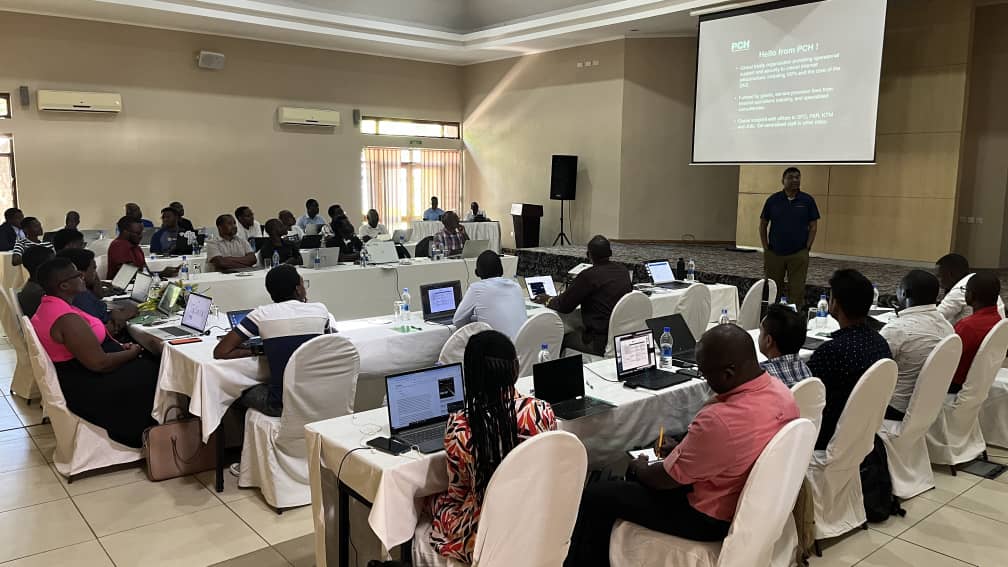
    </p>
    <img src="https://ik.imagekit.io/xnaedr4r6/KAI_Website_Images/Internet_Infrastructure_Development_Workshop2.jpg?updatedAt=1713260539618"/>
    <span><i>The guest of honor, Mr Nishal Goburghan giving his first presentation.</i></span><br/ ><br />
    <p>
        On the first day, Mr. Nishal Goburdhan started by laying out some of the problems that the Malawi Internet is facing
        (Internet being expensive in Malawi, Lack of a country’s Internet connection, many complaints about network issues and
        complaints about internet abuse online) and talked about the importance of internet exchange points (IXP) and how to use
        them to better in the networks in Malawi. His talk helped me understand what an Internet exchange is, the fundamentals
        of IXP operations, the value of peering, peering coordinators, traffic analysis & peering policies, and how to build
        strong technical communities. 
    </p>
    <p>
        On the second day, Mr. Yazid Akanho gave an  overview of the DNS and BGP services, the number of routers that we have
        in the world, how they work, how data is transmitted via  these routers, and how the recursive server (also commonly
        known as the DNS resolver, has the important responsibility of seeking requested data and responding to users’ DNS queries)
        communicates to the routers etc. His presentation helped me to realize the importance of validating and monitoring systems
        in order to provide excellent services to customers.
    </p>
    <p>
        On the third day we had an intense discussion where companies were asking practical questions. The discussions were led by
        Mr. Ghislain Keramugaba. Participants shared their experiences in the field of networking, expressed challenges they have faced
        and how they solved them, and the tools their companies use in order to provide better services to their customers.
    </p>
    <p>
        My key takeaways from this workshop includes the idea that we need to take baby steps in order to solve bigger problems, always
        monitor and validate systems, learn new things by implementing them, always think of how to make systems better and prioritize
        attending as many workshops and conferences as this is where many opportunities are presented. The workshop ended with us agreeing
        to collaborate  with each other by contributing money to build more exchange points in Malawi, write to <a href="https://macra.mw/" target="_blank">Macra</a> requesting for some
        rules and costs related to internet service providence to be revised and hold more meetings in order to improve the internet
        infrastructure in Malawi. 
    </p>
    <img src="https://ik.imagekit.io/xnaedr4r6/KAI_Website_Images/Internet_Infrastructure_Development_Workshop1.jpg?updatedAt=1713260540230"/>
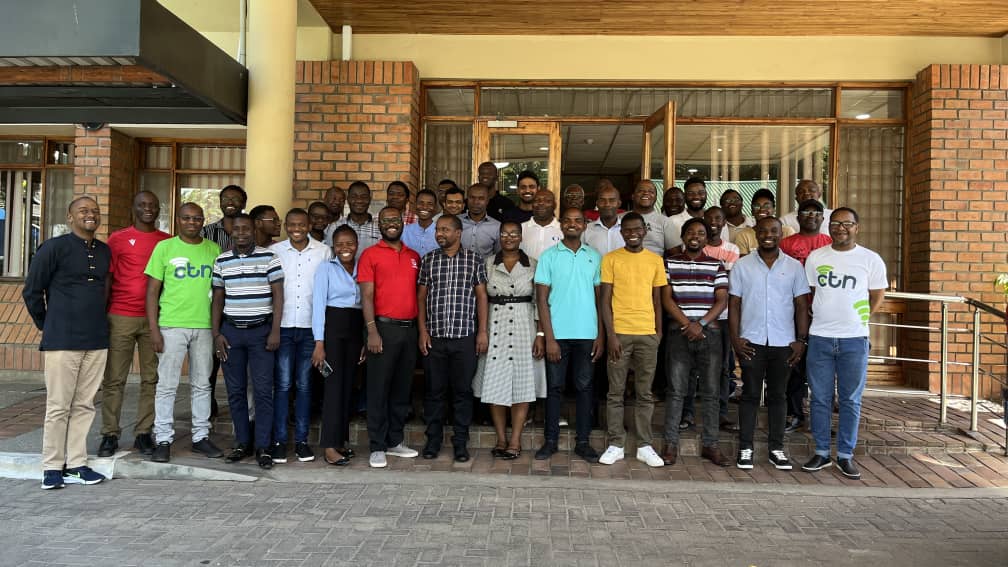
    <span><i>A group photo from the MISPA workshop</i></span>
</div>]]></content><author><name>Evie Chapuma</name></author><summary type="html"><![CDATA[Have you ever wondered what strategies could effectively address the challenges of limited internet accessibility and reliability in Malawi?" The Internet Society (ISOC), in collaboration with the Malawi Internet Service Providers' Association (MISPA), the Internet Corporation for Assigned Names and Numbers (ICANN), and Packet Clearing House (PCH) jointly organized a workshop in Mangochi.]]></summary><media:thumbnail xmlns:media="http://search.yahoo.com/mrss/" url="https://ik.imagekit.io/xnaedr4r6/KAI_Website_Images/Team_Images_With_Uniform_Background/E_Chapuma.jpg?updatedAt=1722240435100" /><media:content medium="image" url="https://ik.imagekit.io/xnaedr4r6/KAI_Website_Images/Team_Images_With_Uniform_Background/E_Chapuma.jpg?updatedAt=1722240435100" xmlns:media="http://search.yahoo.com/mrss/" /></entry><entry><title type="html">Solving Challenges in Disease Surveillance and Data Quality Through the Use of LLMs (IntelSurv Project)</title><link href="https://kailab.tech/2024/03/11/intelsurv-blog.html" rel="alternate" type="text/html" title="Solving Challenges in Disease Surveillance and Data Quality Through the Use of LLMs (IntelSurv Project)" /><published>2024-03-11T06:30:00+00:00</published><updated>2024-03-11T06:30:00+00:00</updated><id>https://kailab.tech/2024/03/11/intelsurv-blog</id><content type="html" xml:base="https://kailab.tech/2024/03/11/intelsurv-blog.html"><![CDATA[<div>
    <p class="blog-first-paragraph">
        <span class="drop-cap">T</span>he response of Malawi to COVID-19 highlighted the significance of surveillance data in
        shaping effective disease control strategies. The current system involves gathering client data
        manually by district health workers using paper-based COVID-19 Case Based Surveillance
        (CBSR) forms. This information is consolidated in an Excel line list database submitted to
        the Public Health Institute of Malawi (PHIM). The shared data is further consolidated with
        other district data for public dissemination and disease response planning.
    </p>
    <p>
        In 2020, before the pandemic escalated, the District Health Management Team (DHMT)
        facilitated the training of health workers in COVID-19 case management and response. The
        team included Environmental Health Officers, Laboratory Officers, Clinicians, nurses, and
        Health Surveillance Assistants (HSA) who were tasked with managing COVID-19 cases and
        executing surveillance tasks. Unfortunately, at that time, there was very little information
        available, and the training was not comprehensive, lacking data management guidance or in-
        depth surveillance training. Nevertheless, the rapid response team grew and played a vital
        role in patient care, collecting client data and entering it into the Case-based Surveillance
        forms. Despite these efforts, the data collection system faced numerous challenges, such as
        understaffing and being overwhelmed by the growing number of COVID-19 cases and clients
        requiring testing and review.
    </p>
    <p>
        To support the surveillance efforts, interns were incorporated into the Environmental Health
        team. They were provided with on-the-job data collection and management training, despite
        the knowledge limitations in using the data collection tools. The teams worked tremendously
        hard to screen and manage COVID-19 cases in prisons, schools, hospitals, and other areas,
        but the nature of the disease and the information given out constantly evolved. The DHMT
        made efforts to train health workers in COVID-19 case management with updated guidelines
        from WHO and the Ministry of Health, but there was no formal training on using the Case-
        Based Surveillance form and key data management principles.
    </p>
    <div class="blog-image-section">
        <div class="blog-image">
            <img src="https://ik.imagekit.io/xnaedr4r6/KAI_Website_Images/covid-passport.webp?updatedAt=1710252594116"/>
        </div>        
        <div class="blog-quote">
            <p>
                This project is an excellent solution to the challenges districts have faced with data for many years,
                and its impact will be tremendous in any future pandemic.
            </p>            
        </div>
    </div>   
    <p>
        The Lilongwe DHMT received concerns from PHIM about the quality of data submitted and
        incidents of data mismatches in national and district data disseminated to the public that
        frequently occurred during the pandemic. It was apparent that there were flaws in the data
        collection, management, and reporting process. DHMT worked with the surveillance teams to
        address the issues raised. Still, the manual data entry systems, lack of training, understaffing,
        and workload remained vital matters that needed to be addressed to combat the problems.
    </p>
    <p>
        Throughout the pandemic, the challenges highlighted as potential causes of data
        discrepancies in the district were only assumed, and there was never any data to support the
        assumptions and to warrant action. It wasn&#39;t until 2022, when the PEACH project led by Dr
        Amelia Taylor started exploring the national COVID-19 list data, that the data evidence gap
        was filled. The data discrepancies were numerous, including missing data, incomplete data,
        and incorrect terminologies. We collaborated and began to investigate the data collection and
        management systems and reasons for data discrepancies in Lilongwe and Blantyre districts
        through a qualitative research project. Our study findings highlighted the need for training
        health workers in the use of the case-based surveillance form and developing a feedback
        mechanism to address data discrepancies in the line list.
    </p>
    <p>
        The qualitative research findings led to the development of the Intelligent Surveillance
        Project (IntelSurv), which leverages large language models to develop a Surveillance training
        application and create an intelligent surveillance feedback system. This project is an excellent
        solution to the challenges districts have faced with data for many years, and its impact will be
        tremendous in any future pandemic. Health workers will have a quick and accessible tool that
        will enable them to collect data correctly, and the feedback system will reduce the workload
        that the manual system poses on health workers.
    </p>
    <p>
        As a member of the District Health Management team for Lilongwe and lead for Covid-19
        case management and Cholera, I am thrilled about this project and the transformative work it
        is offering to districts. We have had a long journey of numerous data challenges, but the
        Intelligent Surveillance Project has shown us that there is hope in changing this by leveraging
        the existence of Artificial Intelligence.
    </p>
</div>]]></content><author><name>Dr. Thokozani Liwewe</name></author><summary type="html"><![CDATA[The response of Malawi to COVID-19 highlighted the significance of surveillance data in shaping effective disease control strategies. The current system involves gathering client data manually by district health workers using paper-based COVID-19 Case Based Surveillance (CBSR) forms. This information is consolidated in an Excel line list database submitted to the Public Health Institute of Malawi (PHIM).]]></summary><media:thumbnail xmlns:media="http://search.yahoo.com/mrss/" url="https://ik.imagekit.io/xnaedr4r6/KAI_Website_Images/Team_Images_With_Uniform_Background/T_Liwewe.jpg?updatedAt=1722240435044" /><media:content medium="image" url="https://ik.imagekit.io/xnaedr4r6/KAI_Website_Images/Team_Images_With_Uniform_Background/T_Liwewe.jpg?updatedAt=1722240435044" xmlns:media="http://search.yahoo.com/mrss/" /></entry></feed>